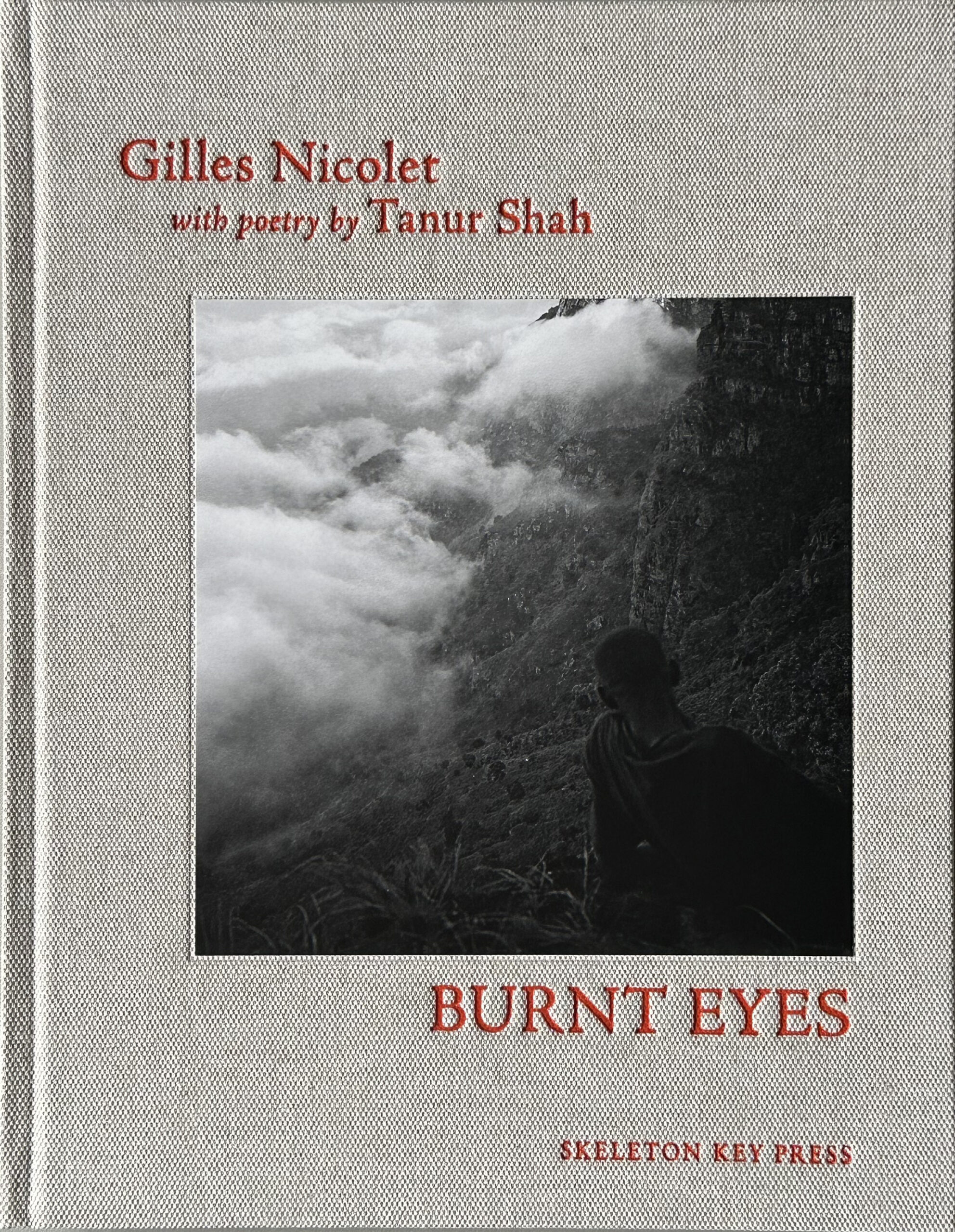
BURNT EYES
- - Published by Skeleton Key Press, 2026
“An exquisite eye.” Patti Smith
“What a sublime book this is… Burnt Eyes transports us to a place that looks and feels like the Godhead, and it is Africa.” Jon Lee Anderson
“Gilles Nicolet’s revealing photographs transcend the visual, leaving a multisensory imprint of Africa. One feels deeply its people, animals, and landscapes. After seeing these powerful images, you will never fully leave Africa.” Roger Ballen
In Burnt Eyes, Gilles Nicolet returns to Africa, a place he once called home, to search for beauty, silence and traces of memory in a rapidly changing landscape. His photographs invite reflection on belonging, loss and the enduring pull of the places that shape us. The project tries to capture the melancholy of parting, the impossibility of leaving and the impossibility of return. It is a yearning for what has slipped away and can never be retrieved.
In an attempt to nudge, Burnt Eyes is also about finally being able to see, not the things they say are beautiful, but the silences and apparent emptiness that beg to be noticed. It asks viewers to ponder, to excavate a recess, to abandon preconceptions. In the end, it isn’t as much about triggering a conversation between the photographer and the observer, as one between the observer and his own self, which often tries to bury many such hidden yet beautiful possibilities.
With poetry by Tanur Shah and a foreword by David Pilling.
A special edition of 10 is available for this book. Sold with a 8 ” x 10 ” fine art print of Like flowers, signed and numbered. Contact me for more information.
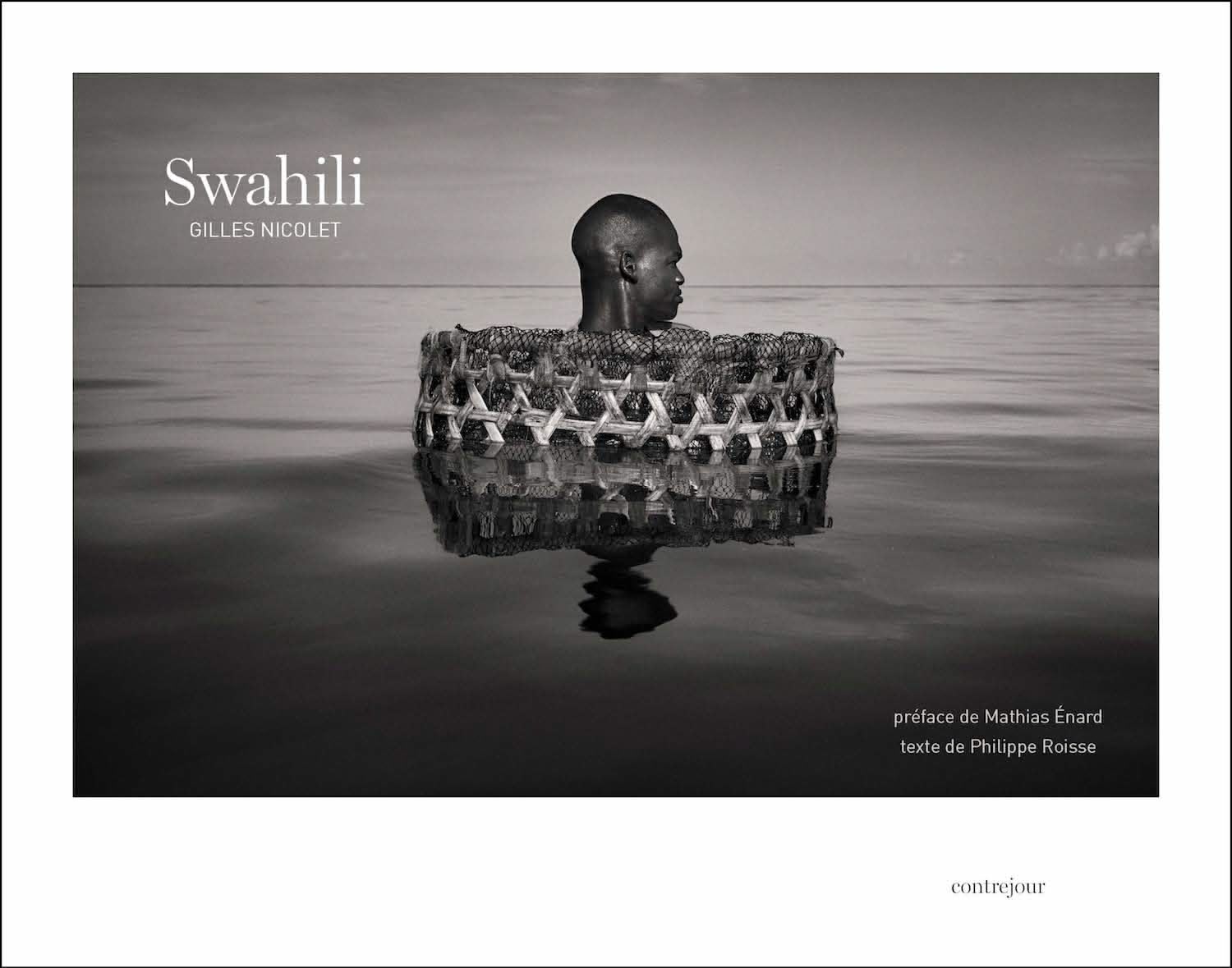
SWAHILI
- - Published by Editions Contrejour, 2019
“The magnificent crispness and painstaking exposures of Gilles Nicolet’s shots… take us on a journey through the Swahili dream, bringing it close enough to touch, without stripping it of its essential mystery: the exhilaration of mysticism and the clear-sighted gaze of poetry.” Mathias Énard
Gilles Nicolet’s images present a tribute to the people and landscape of the Swahili coast, the eastern boundaries of Kenya, Tanzania and Mozambique, and display with artistic imagery a way of life that has existed since the dawn of time, but is being fast eroded by the intrusion of modern commercial practice. Nicolet first went to the Swahili coast some 30 years or so ago and fell in love with it’s empty, wild beauty, the breadth of the sky and the ever present ocean that provides sustenance and income for the indigenous populace. He returned recently armed solely with a 35mm lens, intent on transcribing his memories into images for posterity, determined to discover what was left, what had changed and to better understand how the population, who had occupied these shores for thousands of years, live today. His contemplative and beautiful images of the fishermen and their families, entirely dependent on the once rich harvest from the seas, but now in danger from commercial overfishing of the area, brilliantly evoke the endangered lifestyle. He provides extensive captions to the images, often outlining the economic background involved.
With a foreword by Mathias Énard, Prix Goncourt.